Adv. Harjeet Singh

ADR in India – iPleaders

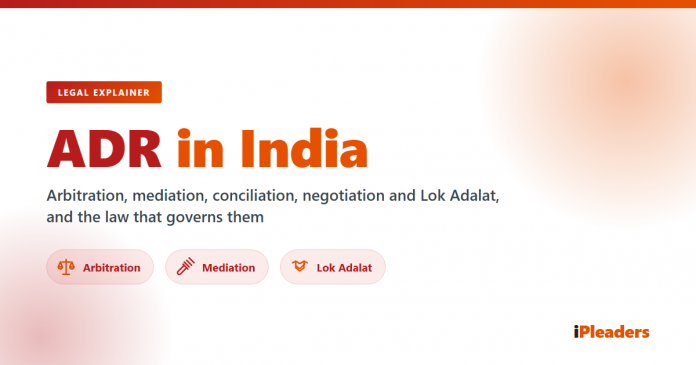
– Alternative dispute resolution (ADR) in India refers to the set of out-of-court mechanisms, arbitration, mediation, conciliation, negotiation and Lok Adalat, used to settle disputes faster and more cheaply than a full court trial. These methods are backed by dedicated statutes, chiefly the Arbitration and Conciliation Act, 1996, the Mediation Act, 2023 and the Legal […]

ADR in India – iPleaders Read More »
Arbitration Courses in India: Fees, Syllabus, Eligibility & Career Scope (2026)

Arbitration courses in India in 2026 range from short online certificates to one-year postgraduate diplomas, LLM specialisations, and globally recognised Ciarb fellowships, with fees running from about ₹3,000 to over ₹3,00,000. Most certificate and diploma courses are open to law students, law graduates, and, in several cases, non-law professionals from commerce, company-secretary, and engineering backgrounds.

Arbitration Courses in India: Fees, Syllabus, Eligibility & Career Scope (2026) Read More »

Types of Arbitration in India

The types of arbitration in India are grouped by four things: how the arbitration is administered (ad hoc or institutional), where it is seated and who the parties are (domestic or international commercial), how the procedure is run (fast-track under Section 29B), and where the reference comes from (consensual or statutory). All of them operate

Types of Arbitration in India Read More »

How to file a regular bail application under Section 480 BNSS (step-by-step)

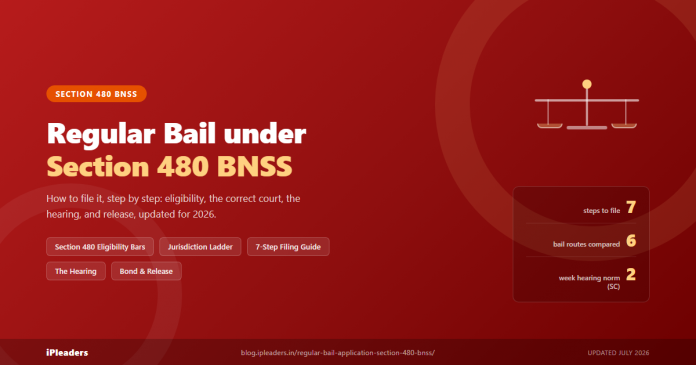
Last verified: July 2026 A regular bail application under Section 480 of the Bharatiya Nagarik Suraksha Sanhita, 2023 (BNSS) is the application by which a person already arrested in a non-bailable offence seeks release from custody while the investigation or trial continues. Section 480, which succeeds Section 437 of the Code of Criminal Procedure, 1973,

How to file a regular bail application under Section 480 BNSS (step-by-step) Read More »

Call Us Now
WhatsApp
Scroll to Top